
Non-Sleep Deep Rest: The Nervous System Reset Your Body Has Been Craving

If you’ve been feeling wired, exhausted, overwhelmed, or stuck in survival mode, your nervous system may be asking for something deeper than sleep.
Enter non-sleep deep rest (NSDR) — a science-backed state of conscious relaxation that allows the body to restore itself without actually falling asleep.
For many people navigating stress, burnout, trauma recovery, or nervous system dysregulation, NSDR can feel like the missing piece.
In this guide, we’ll explore:
What non-sleep deep rest really is
The neuroscience behind why it works
How it supports nervous system regulation
How to practice it step-by-step
How guided Yoga Nidra relates to NSDR
By the end, you’ll know exactly how to use this powerful practice to restore your energy and feel safe in your body again.
What Is Non-Sleep Deep Rest?
Non-sleep deep rest (NSDR) is a state of profound physical relaxation while remaining mentally aware.
Think of it as:
Deeper than meditation
More restorative than a nap
Gentler than traditional mindfulness
During NSDR, the body shifts out of the stress response and into deep parasympathetic healing mode — the state where restoration, repair, and emotional processing naturally happen.
Common NSDR practices include:
Guided yoga nidra
Body scans
Trauma-informed meditation
Hypnosis and deep relaxation scripts
While the term NSDR has gained popularity recently, the practices themselves are ancient — particularly the practice of Yoga Nidra meditation, which means “yogic sleep.”
Why So Many People Need Deep Rest (But Can’t Access It)
Many people today live in a state of functional freeze or high-functioning anxiety.
This can look like:
Feeling exhausted but unable to relax
Trouble falling asleep despite fatigue
Racing thoughts and chronic tension
Burnout that sleep alone doesn’t fix
Feeling disconnected from the body
This happens because stress lives in the nervous system, not just the mind.
Sleep helps the body physically recover. But NSDR helps the nervous system feel safe enough to heal.
The Science Behind Non-Sleep Deep Rest
1. NSDR Activates the Parasympathetic Nervous System
Your nervous system has two main modes:
Sympathetic: fight, flight, freeze
Parasympathetic: rest, digest, repair
Chronic stress keeps many people stuck in sympathetic activation.
During NSDR:
Heart rate slows
Blood pressure drops
Muscles release tension
Cortisol levels decrease
This creates the conditions needed for nervous system regulation.
2. Brain Waves Shift Into Healing States
During deep relaxation, the brain moves from Beta (thinking/stress) into Alpha (relaxed awareness) and Theta (dreamlike restoration).
Theta brain waves are associated with:
Emotional processing
Creativity
Memory integration
Trauma healing
This is why NSDR often feels emotionally releasing.
3. NSDR Restores Dopamine and Energy
Research shows deep rest practices help restore dopamine, the neurotransmitter linked to:
Motivation
Focus
Mood
Energy
This is why a 20-minute NSDR session can feel as refreshing as a nap.
4. Trauma-Informed Meditation and Safety
For people with nervous system dysregulation, traditional meditation can feel:
Frustrating
Triggering
Impossible to sustain
Trauma-informed meditation — like guided Yoga Nidra — provides:
Structure
Gentle guidance
A sense of safety
This allows the nervous system to relax without forcing stillness.
NSDR vs Meditation vs Sleep
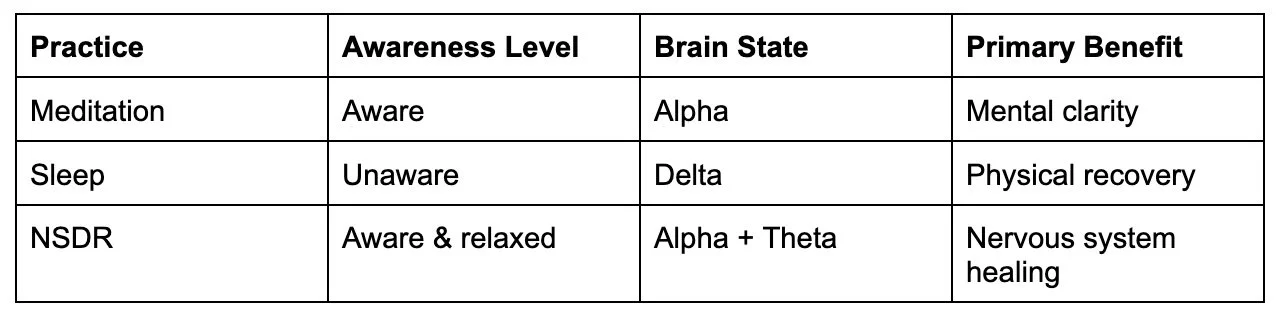
NSDR bridges the gap between meditation and sleep.
Benefits of Non-Sleep Deep Rest
Regular NSDR practice can support:
Emotional Well-Being
Improved mood
Emotional resilience
Trauma processing
Physical Health
Lower cortisol
Better sleep quality
Reduced inflammation
Muscle relaxation
Mental Performance
Improved focus
Creativity boosts
Memory consolidation
Reduced burnout
Many people describe NSDR as finally feeling safe in their bodies.
The Connection Between NSDR and Yoga Nidra
Guided Yoga Nidra is one of the most effective forms of non-sleep deep rest.
Yoga Nidra guides you through:
Body awareness
Breath awareness
Emotional processing
Visualization
Deep relaxation
This structured journey makes it especially powerful for nervous system regulation.
Try a free Yoga Nidra practice below.
How to Practice Non-Sleep Deep Rest (Step-by-Step)
Step 1: Create a Safe Resting Space
Lie down somewhere comfortable.
Support your body with:
Blanket
Pillow under knees
Eye mask (optional)
Comfort signals safety to the nervous system.
Step 2: Set an Intention
Examples of intention or sankalpa statements include:
“I allow my body to rest.”
“I am safe to relax.”
“I am enough.”
Intentions gently anchor the mind.
Step 3: Use a Guided Practice
Beginners benefit most from guided NSDR or Yoga Nidra.
This is because guidance:
Prevents rumination
Reduces pressure to “do it right”
Creates safety and containment
This is where a meditation library becomes invaluable. Try the Humaya app for hundreds of guided practices.
Step 4: Let Yourself Drift
You may:
Fall asleep briefly
Lose track of the audio
Feel emotional release
All of this is normal and beneficial.
Step 5: Reawaken Slowly
After the practice:
Wiggle fingers and toes
Stretch gently
Sit up slowly
Give your nervous system time to transition.
When to Practice NSDR
Ideal times include:
Mid-afternoon energy slump
After work to release stress
Before sleep to improve sleep quality
After emotional overwhelm
Even 10–20 minutes can be transformative.
Signs Your Nervous System Needs NSDR
You might benefit from NSDR if you:
Feel tired but wired
Have trouble relaxing
Experience burnout or anxiety
Feel disconnected from your body
Want deeper rest without sleeping
This practice meets your nervous system exactly where it is.
Making NSDR a Daily Ritual
Try:
10 minutes daily
20 minutes 3x per week
A longer session on weekends
Consistency matters more than duration.
Frequently Asked Questions About Non-Sleep Deep Rest
What is non-sleep deep rest?
Non-sleep deep rest is a guided relaxation practice that helps the body enter a restorative state without falling asleep. It supports nervous system regulation and deep relaxation.
Is Yoga Nidra the same as NSDR?
Yoga Nidra is a structured form of non-sleep deep rest. It is an ancient yogic practice and one of the most effective ways to practice NSDR.
Can NSDR replace naps?
A 20-minute NSDR session can provide many of the restorative benefits of a nap, especially for mental and emotional recovery.
How often should you practice NSDR?
Daily practice is ideal, but even 2–3 sessions per week can significantly improve stress and sleep.
Does NSDR help anxiety?
Yes. NSDR activates the parasympathetic nervous system, lowering stress hormones and calming the body.
Can beginners do NSDR?
Absolutely. Guided practices are especially beginner-friendly and trauma-informed.
Why Guided Practices Work Better
Trying to relax on your own can feel frustrating.
Guided meditation:
Provides structure
Supports safety
Helps the mind release control
This is why many people start with guided practices. You can try a free practice below or download the Humaya app for a full library of guided meditation practices.
The Future of Rest Is Conscious Rest
We’ve been taught that rest equals sleep.
But the nervous system needs conscious, intentional rest too.
Non-sleep deep rest gives your body permission to:
Slow down
Feel safe
Repair deeply
It’s not a luxury. It’s a biological need. And it’s becoming increasingly important in today’s fast-paced and overstimulated society.
Ready to Experience Non-Sleep Deep Rest?
If you’re ready to:
Reset your nervous system
Reduce stress and burnout
Experience deep relaxation
Try a FREE NSDR practice below.